

Black tourmaline and black obsidian look similar at first glance, so which one should you choose? Both are dark, both are popular for grounding rituals, and both are easy to mix up. In fact, they are completely different materials with their own textures, strengths and traditions. This guide compares them side by side so you can pick the stone that fits your style and your space.
What Is Black Tourmaline?
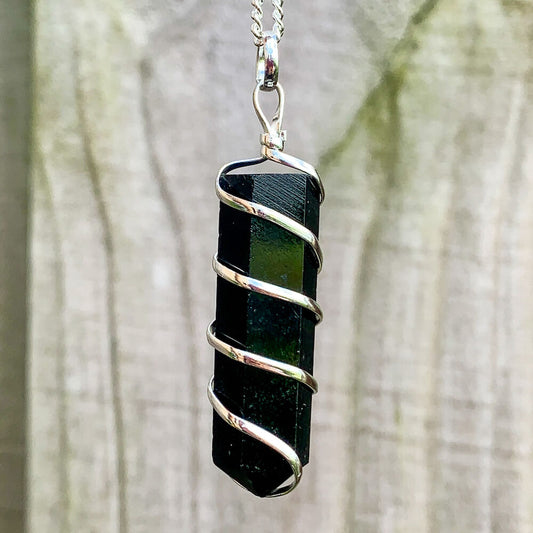
Black tourmaline, also called schorl, is a crystalline mineral that forms in long, striated columns. It rates about 7 to 7.5 on the Mohs hardness scale. Raw pieces have a matte to slightly glassy look, and the sides show distinctive vertical lines, almost like grooves. Polished pieces look deep black with a soft shine.
What Is Black Obsidian?
Black obsidian is volcanic glass. It forms when lava cools so quickly that crystals have no time to grow. That is why obsidian has a smooth, glossy surface and curved, shell-like fractures. It rates about 5 to 5.5 on the Mohs scale, so it is softer than tourmaline and can chip or scratch more easily. Broken edges can be very sharp.
Side-by-Side Comparison
- Origin: tourmaline is a crystal mineral; obsidian is natural volcanic glass.
- Look: tourmaline is often striated and matte in raw form; obsidian is glassy and mirror-like.
- Hardness: tourmaline is harder and more durable; obsidian is more brittle.
- Fracture: tourmaline breaks unevenly; obsidian breaks in smooth, curved shapes.
- Shapes: tourmaline appears as raw rods and rough pieces; obsidian is common as spheres, arrowheads and polished pieces.
- Feel: obsidian feels smooth and cool; raw tourmaline feels textured.
How to Tell Them Apart
Step 1: Look at the Surface
Check for vertical lines running along the sides. Striations point toward tourmaline. A glassy, seamless surface points toward obsidian.
Step 2: Hold It to the Light
Thin edges of obsidian often look smoky gray or brown when light passes through. Black tourmaline is generally opaque, even at thin edges.
Step 3: Check the Edges
Curved, shell-like chips are a sign of obsidian. Uneven or splintery breaks suggest tourmaline.
Step 4: Compare Weight
Tourmaline usually feels heavier for its size than obsidian.
A similar mix-up happens with onyx, which you can read about in our post What's the Difference Between Onyx and Obsidian?
Traditional Meanings
Both stones are traditionally associated with protection and grounding, which is why they are so popular near doorways, desks and meditation spaces. These associations come from tradition and personal belief rather than scientific evidence.
- Black tourmaline: traditionally associated with a protective, steady, grounded feeling, and often placed by entrances.
- Black obsidian: traditionally associated with honest self-reflection, sometimes called a "mirror" stone because of its glossy surface.
Which One Should You Choose?
Choose black tourmaline if you want a sturdy stone for everyday carrying, a textured raw piece for a shelf, or a long-lasting jewelry stone. Choose black obsidian if you love smooth, reflective surfaces, such as spheres, or want a sleek decorative piece. Many people keep both: tourmaline near the door and obsidian on a desk or altar.
Questions People Ask
Which one is better for jewelry?
Black tourmaline is the more durable choice for everyday jewelry because it is harder and less likely to chip. Obsidian jewelry looks sleek but is best for occasional wear, since it can scratch or chip with knocks.
Can I keep them together?
Yes, but store them separately when you are not displaying them. Obsidian is softer, so a harder stone can scratch it. Wrap each piece in soft cloth or keep them in separate compartments.
Are raw pieces safe to handle?
Raw tourmaline can have rough edges, and broken obsidian can be very sharp. Handle new pieces carefully and keep them away from young children and pets.
How do I know I am buying the right stone?
Check the product description for the stone name and form, and compare the look with the clues above: vertical lines for tourmaline, a glassy surface for obsidian. If you are unsure, ask the seller before you buy.
Care Tips for Both Stones
- Dust regularly with a soft, dry cloth.
- Avoid knocks. Obsidian especially can chip, so store it padded.
- Avoid prolonged soaking. A quick wipe with a damp cloth is enough for most pieces; if a piece is set in jewelry, keep it dry.
- Cleanse gently with smoke, sound or moonlight if you enjoy the ritual.
Final Thoughts
These two dark stones may be neighbors on the shelf, but they are not twins. Knowing the difference helps you shop smarter and care for each piece properly. When you are ready, explore our black tourmaline collection and our black obsidian collection at Magic Crystals.
Crystals complement a wellness routine and do not replace medical advice. Metaphysical meanings mentioned here are based on tradition and personal belief.